
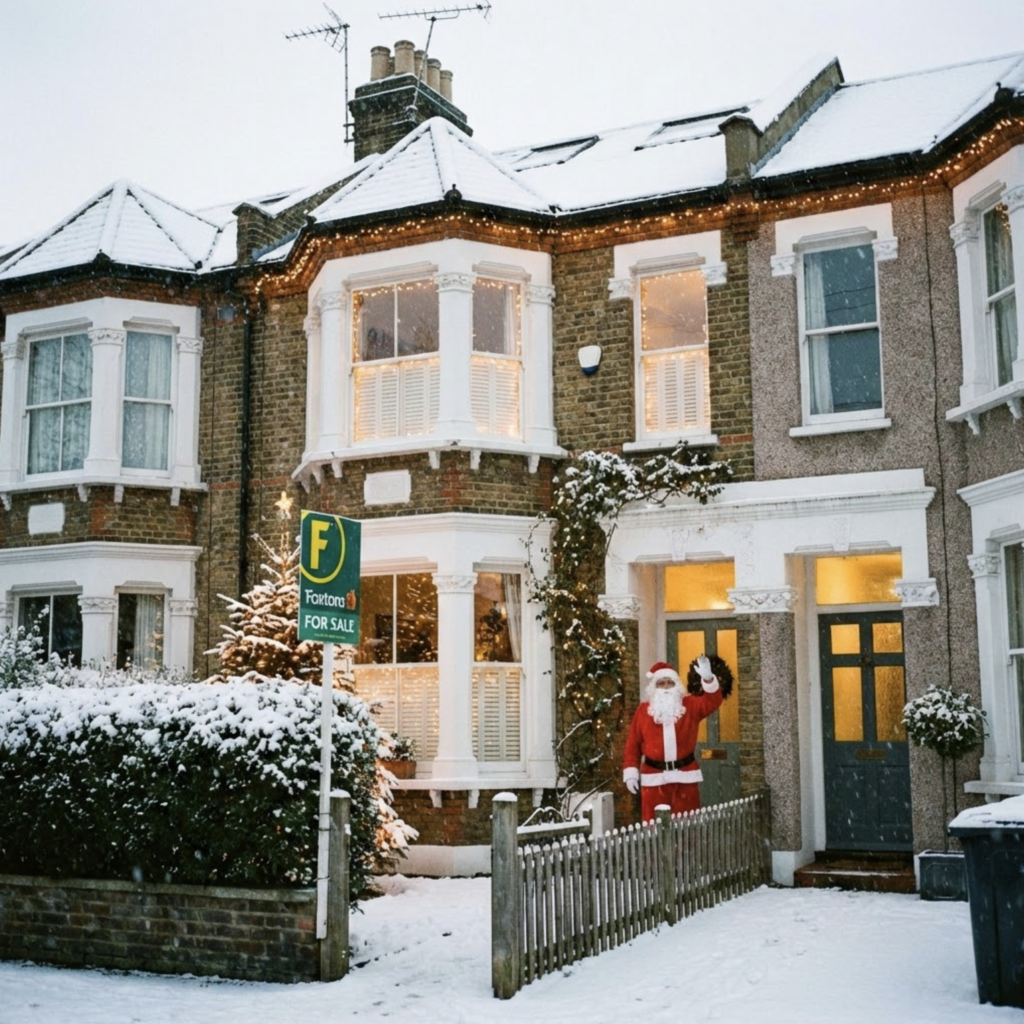
As the festive season draws near, many prospective buyers and sellers assume the property market grinds to a halt. While there’s some truth in that, the story is more nuanced – and for some people, this quieter time offers opportunities. Below we explore what tends to happen to the UK housing market over the festive period, the typical trends and quirks, and when might be the best time to act if you’re buying or selling.
🎄 What Usually Happens at Christmas: Market Trends & Quirks
❄️ Seasonal slowdown in viewings and listings
- Historically, December and the winter months are among the slowest times of year to sell a home. Many potential buyers shift their attention to holiday plans, family, and end-of-year finances, meaning fewer viewings and lower buyer enquiries.
- As a result, properties listed during December often sit on the market until after Christmas — unless the seller is very motivated or the property is priced attractively.
- For many sellers, the last two months of the year (November and December) are seen as sub-optimal for launching a new listing.
📉 Prices can dip or growth stalls
- According to seasonal-analysis from the property consultancy side, average property prices in November and December tend to be among the lowest of the year. The “spring-summer premium” (when gardens, natural light, and pleasant weather make homes more attractive) tends to push prices up, but those factors work against sellers in winter.
- For buyers, winter (including the festive period) can mean better negotiating power, especially if a seller is keen to sell before the New Year.
💤 A lull — but not a total shutdown
- That said, it’s not the case that everything grinds to a halt. Some buyers and sellers stay active – especially those needing to move quickly, or those hoping for less competition.
- Interestingly, there is sometimes a “post-Christmas bounce.” As the holidays wind down, demand often picks up: many buyers decide that the coming year is “the year to move,” which fuels activity from late December / early January onward.
🏡 What This Means For Buyers and Sellers
For Buyers
- Less competition: With fewer buyers actively looking during December, motivated buyers may find better deals – sometimes sellers are more open to offers, especially as they may want to complete before year-end.
- Potential for savings: Lower demand can mean downward pressure on asking prices, giving buyers an edge on price and negotiation.
- Flexibility and patience pay off: If you’re not in a rush, you might find that offers and negotiations go more smoothly during winter, with less competition.
For Sellers
- Be realistic on timing and pricing: Listing during December isn’t ideal if you need a quick sale – viewings tend to drop off, and many buyers wait until after the holidays.
- Consider waiting until New Year or early February: Many estate-agent guides suggest that early spring (particularly late Feb / March) tends to see the strongest buyer activity and higher sale prices.
- If you must sell now – price for it: A winter sale might secure a buyer, but you (or your agent) may need to price more competitively and manage expectations around a longer time on the market.
📆 When’s the Best Time to Buy or Sell?
| Purpose | Best Period(s) | Why |
| Buying a home (with potential for better price and less competition) | Late Autumn (Nov), Winter (Dec–Feb) | Less buyer competition, motivated sellers, potential for negotiation. |
| Selling a home (to get the best possible price and quickest sale) | Spring (March–May), early Autumn (Sept–Oct) | Gardens and exteriors look better; higher buyer demand; longer daylight for viewings. |
| Selling if you’re okay with slower interest but fewer competitors | Winter (Dec–Jan) / early New Year (Jan–Feb) | Less competition among sellers – might be useful if you want to stand out or have a motivated buyer. |
🎯 What This Means for Mallard Mortgages Clients
As a mortgage advisory specialist – particularly for self-employed or credit-impaired clients – Mallard Mortgages is well-placed to help clients navigate these seasonal quirks. Here’s how:
- For buyers: Winter might offer a window to secure good deals with less competition – but affordability, mortgage rates, and financing remain critical. You can provide tailored advice, especially to self-employed or non-traditional applicants, who might benefit from price flexibility.
- For sellers buying and selling in tandem: If clients plan to sell and then buy, timing is key. They may want to avoid listing during December, and ideally wait until after Christmas / New Year to launch their sale – maximising prospects for a stronger offer.
- For long-term planning: Encouraging clients to aim for spring listings (if feasible) could help them achieve better sale prices, especially for homes with gardens or exterior appeal – something that might still matter as the housing market recovers or shifts.
🔮 What’s Different This Christmas – 2025 Update
Recent data suggests the UK market has shown modest resilience through November 2025: average house prices rose slightly by 0.3 % month-on-month, and while annual growth has slowed (down to ~1.8 %), demand remains broadly stable.
This suggests that while seasonality still plays a role, broader economic factors – wage growth, mortgage rate movements, consumer confidence – may outweigh the historic “Christmas slowdown.” This could mean that for sellers who price realistically, or for buyers with a clear plan, winter 2025/26 might offer more opportunities than in prior years.
As mortgage advisors, you might see renewed interest from people wanting to take advantage of modest price rises before any expected interest-rate shifts, or those looking to buy into the market before spring.
✅ Final Thoughts
The festive period remains a double-edged sword for the UK housing market. On one hand, fewer buyers and shorter days often mean a slower market, making December and January generally not ideal if you want a quick sale or high price. On the other hand, for buyers with flexibility – or sellers who are savvy with their pricing – winter can bring opportunities: less competition, negotiation leverage, and the possibility of re-launching once the New Year brings renewed activity.
For firms like Mallard Mortgages, the festive season is a chance to support clients with sound guidance – whether that’s advising a winter buy, planning a spring sale, or simply preparing clients for the seasonal market rhythm.
Let's discuss your mortgage options
We are a family mortgage and protection business specialising in offering personal and tailored advice.
We understand how complex these matters can be and we take the time and care to make sure you fully understand the ins and outs of the process.
Get in touch for an initial chat. We are available from early until late Monday to Friday.
No obligation chat
Independent advice
Award winning team
We can help where others can't
Chat with us TODAY